Coordinated medical pathway
Building a structured medical case, identifying an appropriate hospital facility, and coordinating communication between healthcare, diplomatic and institutional stakeholders involved in the process.
A pathway made possible through coordination
In some situations, the medical need is clearly identified and a hospital may already be willing to assess the case. Yet without proper coordination, the entire pathway can remain stalled.
An anonymised example of a complex medical pathway
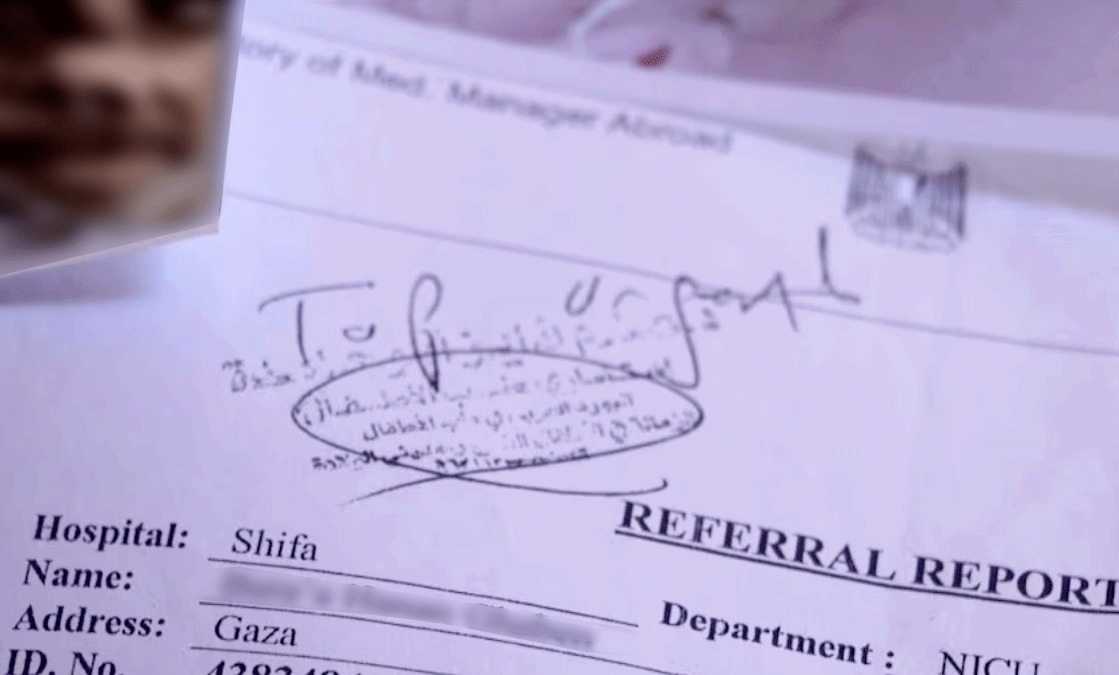
This case concerns a civilian patient requiring specialised medical care outside a conflict zone. An initial assessment opportunity was identified with a private hospital facility, but that first step alone was not enough.
A medical, administrative and institutional challenge
The process required structuring the medical file, clarifying the available information, securing a viable medical option, transmitting the relevant documentation to the appropriate coordination mechanisms, and engaging the institutional stakeholders able to review a possible transfer solution.

Making a medical solution possible
In situations like these, the challenge goes far beyond healthcare alone. Even when treatment options exist, they can remain inaccessible if the medical file is incomplete, unclear or not transmitted to the right stakeholders.
- Building a clear and complete medical file
- Identifying a hospital facility able to assess the case
- Clarifying admission and follow-up conditions
- Sharing the necessary information with the relevant health coordination mechanisms
- Coordinating with embassies and institutional authorities involved
- Maintaining consistent follow-up despite delays and uncertainty
The pathway, step by step
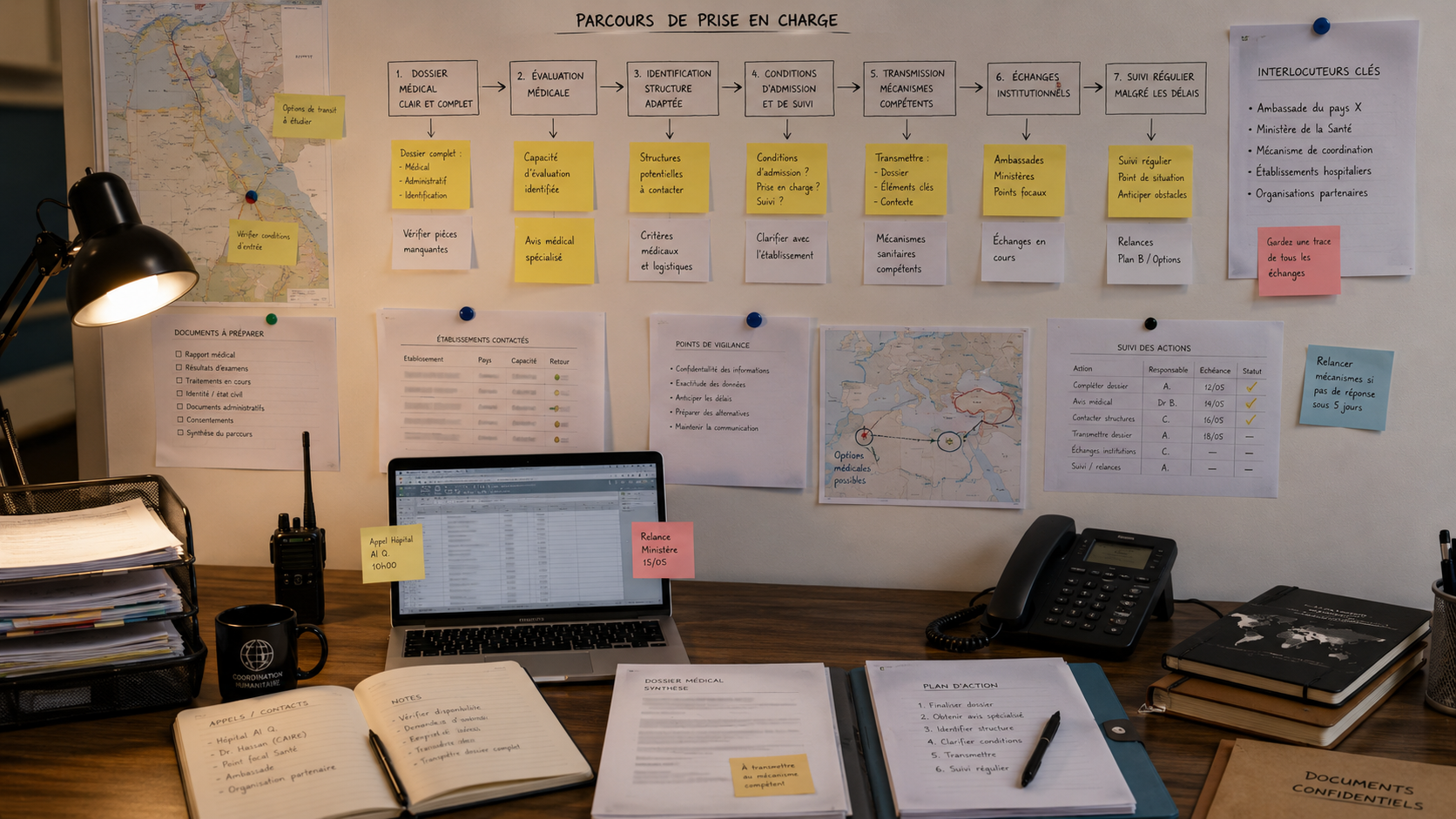
Reviewing the available elements: medical condition, family context, supporting documentation and administrative constraints.
Gathering, organising and presenting the information in a way that allows the relevant stakeholders to properly assess the case.
Searching for a healthcare facility able to review the file and evaluate whether specialised treatment may be possible.
Facilitating exchanges with the relevant coordination bodies, particularly when cross-border medical referral is being considered.
Opening discussions, depending on the situation, with embassies, ministries or competent authorities to explore potential reception solutions.
Maintaining regular monitoring of the case according to medical developments, responses received and realistic treatment possibilities.
Connecting stakeholders to unlock a medical pathway
Human Sea Bridge acts as a coordination facilitator between families, medical professionals, hospital facilities and the institutional actors involved in the process.
- Structuring the medical file
- Identifying a hospital assessment option
- Coordinating with relevant health mechanisms
- Engaging institutional stakeholders
- Ensuring documented follow-up

What this case illustrates
This example highlights that a medical pathway is never built around healthcare alone. It depends on an entire chain of coordination involving families, doctors, hospitals, health coordination mechanisms, embassies, ministries, humanitarian actors and competent institutions.
A missing document, incomplete information or an unidentified stakeholder can slow down — or entirely block — the process.
Human Sea Bridge works to connect these different elements: making medical files understandable and actionable, securing communication between stakeholders, ensuring continuity of follow-up, and helping create the conditions under which a reception solution may become possible.
What your support makes possible
- Documenting medical cases
- Verifying and consolidating available information
- Coordinating with families and healthcare professionals
- Contacting hospital facilities
- Liaising with the appropriate health coordination mechanisms
- Conducting institutional outreach and procedures
- Ensuring continuous follow-up until a viable solution can be identified